• Skip to main content
  • Skip to footer

Damiens Law Firm

Tax Attorney

FREE EBOOK: How To Survive The IRS

601-957-9672

  • Tax Problems
    • Asset Seizure
    • Back Taxes
    • IRS Collection Notices
      • IRS Form 9297
      • CP504 Notice
    • Non-Filed Tax Returns
    • Payroll Taxes
    • Penalty for Filing a False Tax Return
    • Tax Audits
    • Tax Levies
    • Tax Liens
    • Tax Penalties
    • Wage Garnishment
      • IRS Wage Garnishment FAQs
    • Find the Right Tax Debt Attorney in Mississippi for IRS Relief
      • IRS Tax Audit Attorney Mississippi
  • Tax Relief
    • Bankruptcy Options
    • Currently Not Collectible
    • Innocent Spouse Relief
    • Offer in Compromise
    • Payment Plans
    • Penalty Abatement
    • Tax Audit Defense
    • IRS Tax Appeals
    • IRS Forgiveness Programs
    • Tax Transcript Review
    • Tax Attorney
    • Memphis Tax Attorney
      • Tax Debt Attorney Memphis, TN
      • Tax Resolution Services Memphis, TN
      • IRS Tax Audit Attorney Memphis, TN
      • Memphis Payroll Tax Lawyer
      • Memphis Wage Garnishment Lawyer
      • Memphis Penalty Abatement Attorney
      • Memphis IRS Audit Attorney
      • Memphis Asset Seizure Attorney
      • Memphis Tax Levy Lawyer
      • Memphis Currently Not Collectible Attorney
      • Memphis Innocent Spouse Relief Attorney
      • Memphis Offer in Compromise Attorney
  • Tax Strategies
    • Historical Bookkeeping & Accounting
    • Estate Tax Planning
    • Estate Planning
    • Tax Planning
  • Learning Center
  • Blog
  • FAQs
    • Buying a House with IRS Tax Debt? Know What to Expect
    • Can the IRS Arrest You?
    • Can You Buy a House If You Owe Taxes?
    • Can You Go to Jail for Unpaid Taxes?
    • Do You Need a Lawyer for an IRS Tax Audit?
    • How Can a Truck Driver Settle Back Taxes With the IRS?
    • What Do I Do if I Receive an IRS Payroll Tax Audit?
    • What To Do if You Receive an IRS Tax Notice
    • Can a Tax Debt Attorney in Mississippi Help You Navigate the IRS Fresh Start Program?
    • Demystifying IRS Payment Programs: How Can a Tax Debt Attorney in Mississippi Assist You?
    • Can a Tax Debt Attorney in Mississippi Shield You from IRS Liability When Your Spouse Owes Back Taxes?
    • Can the IRS Freeze My Bank Account?
    • IRS Wage Garnishment
    • What is the Employee Retention Credit (ERC)?
    • How to Remove IRS Penalties: Your Ultimate Guide to Penalty Relief
    • 10 Steps to Resolving Your IRS Tax Issues
    • Can I Get Married if My Fiance Owes Taxes?
    • How Do I Initiate an Offer in Compromise to the IRS?
    • What are Mississippi Payroll Taxes?
    • What is a Final Notice and a Notice of Intent to Levy?
    • Can I Get Help With Wage Garnishment?
    • Can the IRS Garnish My Wages?
    • Unlock Tax Relief: Learn How to Qualify for IRS Tax Forgiveness
    • What’s the Difference Between a Tax Attorney and a CPA? 
    • Top 3 Advantages Of Married Filing Separately
  • About
    • About Damiens Law
    • Our Tax Law Team
    • Reviews
  • Contact Us
Home | Blog | Innocent Spouse Relief | What is innocent spouse relief?

What is innocent spouse relief?

September 28, 2022 by Damiens Law Firm, PLLC

GET OUR FREE EBOOK

How to Survive the IRS

DOWNLOAD YOUR COPY

  • Categories
  • Bankruptcy
  • Bookkeeping
  • Business Tax
  • Innocent Spouse Relief
  • IRS
  • Learning Center
  • Offer in Compromise
  • Tax Liability
  • Tax Planning
  • Tax Relief
  • Taxes
  • Wage Garnishment
  • "Excellent and professional work helping with our business and personal legal and estate planning needs."

    - Natural Restorations

  • "I would highly recommend this firm to anyone needing legal assistance."

    - Julian Wolfe

  • "I have referred all of my clients with any Tax related issues to Joseph Damiens."

    - Damian Holcomb

Innocent Spouse Relief Paperwork

Married couples often file joint tax returns due to certain tax benefits that are available to them. Those who file joint returns share all tax liabilities, including interest and penalties. However, if one spouse commits a tax offense like concealing income, without the knowledge of the other spouse, the Internal Revenue Service (IRS) may allow the innocent spouse to apply for one of four programs that could absolve him or her of the related tax liabilities.

If your spouse violated the tax code without your knowledge and you would like to learn more about innocent spouse relief, consider contacting an experienced tax attorney at Damiens Law by calling (601) 957-9672.

How does joint and several liability apply to taxes?

Joint and several liability is a legal term that applies to any situation in which two or more parties share liability, including lawsuits and taxes. When this concept applies, both parties may be held liable for damages up to the full amount.

In general, according to the Internal Revenue Service, both spouses are jointly and severally liable for taxes from jointly filed returns. This means that the full tax liability may apply to both spouses, even if only one of the spouses earned income that year. However, Section 6015 of the Internal Revenue Code offers three forms of relief for innocent spouses in certain situations.

What are the types of innocent spouse relief?

The IRS offers three opportunities for relief from joint and several liability at the federal level. In addition, taxpayers who lived in community property states and did not file joint taxes with their spouses may qualify for relief under their state’s community property laws.

Who can file for innocent spouse relief?

While the term “innocent spouse relief” is often used in a general way to refer to any form of relief from tax liability in a jointly filed return, the IRS also has a specific innocent spouse relief provision. This form of tax liability relief is available if a person’s spouse or former spouse did not report his or her full income, improperly reported income, or claimed erroneous deductions or credits.

A taxpayer who wishes to apply for innocent spouse relief will need to meet certain conditions to qualify, including all of the following:

  • The joint return understated taxes solely related to one spouse’s error
  • The innocent spouse can show that he or she was unaware of the understatement of tax when signing the joint return
  • The innocent spouse has not lived with the other spouse at any time during the one-year period ending on the date of the relief request

Separation of liability

In some situations, taxpayers who do not qualify for innocent spouse relief may be eligible for relief through separation of liability. This provision is available to taxpayers who are separated from the spouse responsible for the tax understatement. Those who wish to apply must do so within two years of the date the IRS began collections activities. One of these three conditions must be met to qualify for separation of liability relief:

  • Divorce or legal separation from the spouse who made the error
  • The other spouse has passed away since filing the return
  • The spouse applying for relief has not lived with the other spouse in the 12 months leading up to the request for relief

Applicants must also establish that they had no real knowledge of the issue that caused the tax dispute when they signed the joint return or that they were forced to sign the return even with knowledge. You can learn more about applying for separation of liability relief from a skilled tax attorney at Damiens Law.

Equitable relief

Taxpayers who qualify for neither innocent spouse relief nor relief through separation of liability may have the option to apply for equitable relief. The applicant must show that, based on his or her unique situation, holding him or her liable for tax underpayments and deficiencies would be unfair. Equitable relief may be an option if an error on the tax return is attributable to a person’s spouse, or if the amount of tax was reported correctly but was not paid. The IRS will consider several factors when determining whether to accept a request for equitable relief. The relief is only granted, however, if the following three conditions are met:

  • Marital status—The spouses must be either divorced, legally separated, or living in different households for at least one year prior to the request
  • Knowledge—The spouse applying for the relief had no knowledge or reason to know about the tax return inaccuracies when signing the return
  • Economic hardship—The applicant will suffer economic hardship if the IRS does not grant equitable relief

Other factors that may be considered include but are not limited to the following:

  • The spouse’s legal obligation to pay the tax liability based on a divorce decree or other agreement to pay the liability
  • The spouse to which the liability is attributable
  • Whether the requesting spouse stands to gain a significant benefit by receiving relief
  • The mental and/or physical health of the requesting spouse at the time the return was signed and at the time relief was requested
  • Compliance with income tax laws in the years following the taxable year or years related to the request for relief
  • Whether there was abuse in the marriage

Community property relief

In certain states, this fourth form of relief may be available. Community property laws declare that any assets acquired during a marriage are considered community property, regardless of who purchased the assets. In these states, spouses can also face tax liability for community income, even if they file their taxes separately. In this scenario, spouses may request relief from all or a portion of the liability. Neither Mississippi nor Tennessee is a community property state, so there is more flexibility when dividing a couple’s assets and liabilities.

How to apply for innocent spouse relief

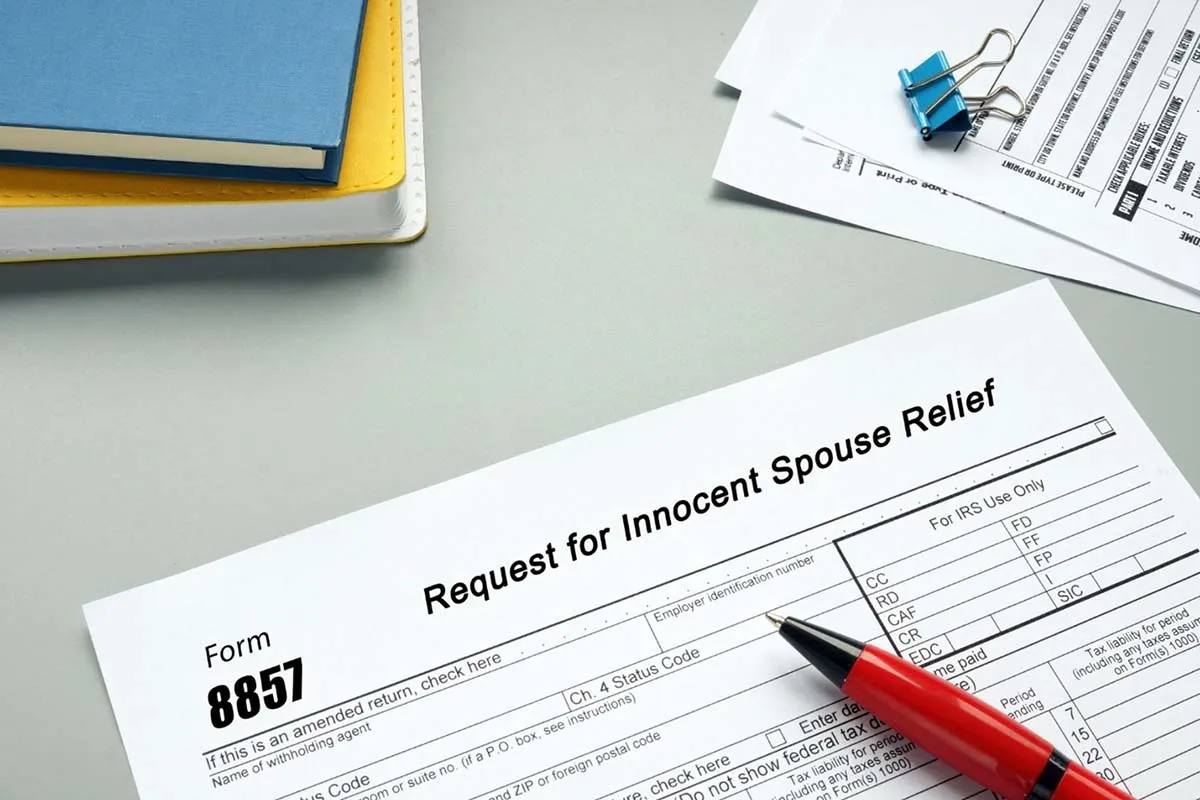
Taxpayers who wish to apply for innocent spouse relief, separation of liability relief, or equitable relief must submit one of two documents—IRS Form 8857, Request for Innocent Spouse Relief, or a written statement that contains the same information found on that form. The application process is generally the same for all three types of relief, but the responses and information provided will vary.

IRS Form 8857—request for innocent spouse relief

IRS Form 8857 is a seven-page document used to request innocent spouse relief. This complex form includes extensive questions regarding the applicant’s situation and the circumstances that may qualify him or her for relief. These questions cover a wide range of relevant subjects.

The responses can determine whether the request will be accepted, so the applicant must carefully consider how to answer each question. For example, the IRS may ask about the taxpayer’s education and work experience to determine if he or she were educated enough or had enough business experience to know that something was wrong with the return.

Innocent spouse relief letter

All applicants have the option to submit an innocent spouse relief letter instead of IRS Form 8857, as long as the letter includes the same information. However, spouses who are filing for relief based on being victims of abuse from a spouse or former spouse are required to file this letter.

A letter can be beneficial for all applicants, as it provides the opportunity to fully explain responses to the questions in Form 8857. These extra details can help to establish the circumstances that qualify a taxpayer for relief.

How long does it take for innocent spouse relief to be approved or denied?

taxes and judges gavel

According to the Internal Revenue Service, it may take up to six months to determine whether to accept or deny a request filed under Form 8857. During this processing period, the IRS requests the applicant’s tax information and contacts the other spouse. The IRS is legally required to contact spouses in all situations, regardless of the circumstances. Unfortunately, there are no exceptions for spouses who have been victims of abuse.

The IRS informs the other spouse that Form 8857 was filed and gives him or her the option to involve in the proceeding. The spouse is also informed of the preliminary and final determinations regarding whether to accept the request. However, the personal information of the applicant is kept confidential in the interest of protecting privacy.

Contact a tax attorney to learn more

If you are facing tax issues with the IRS based on poor decisions by a spouse or former spouse, it is important to be aware of your options for relief. Depending on the circumstances of the situation, you may qualify for one of three forms of innocent spouse relief. Relief is available to protect spouses who were unaware of unreported income, erroneous deductions, and other tax issues that result in penalties and interest. However, filing an application for relief can be a complicated process, and errors can result in a request being denied.

If you are applying for innocent spouse relief to avoid liability for your spouse’s tax issues or need help resolving other tax disputes with the IRS, consider contacting an experienced tax attorney at Damiens Law today by calling (601) 957-9672 to schedule a consultation.

Contact us online or call (601) 957-9672 to schedule a free consultation.

Related posts:

  • Divorce and IRS debt: who’s responsible for paying back taxes?
  • What is a tax attorney, and what are their responsibilities?
  • Why should you consider contacting an IRS tax attorney regarding IRS collections?

Footer

Get Started - We are ready to fight for you!

Damiens Law

601-957-9672

Facebook
Avvo
Linkedin
Ridgeland Office

996 Northpark Dr., Suite A
Ridgeland, MS 39157

Map and Directions

Gulfport Office

2218 17th Street
Gulfport, MS 39501

Map and Directions

Memphis Office

1331 Union Ave., Suite 918
Memphis, TN 38104

Map and Directions

This field is for validation purposes and should be left unchanged.
First Name(Required)
Name(Required)
  • Tax Relief
  • Tax Strategies
  • About Us
  • Terms of Service
  • Privacy Policy
  • Site Map

© 2026 All Rights Reserved. | This site is protected by reCAPTCHA and the Google Privacy Policy and Terms of Service apply. | The information on this website is for general information purposes only. Nothing on this site should be taken as legal advice for any individual case or situation. This information is not intended to create, and receipt or viewing does not constitute, an attorney-client relationship.

Schedule a free, no obligation 15-minute discovery call

Do any of the following scenarios describe your current situation?

  • You’re being audited. 
  • You owe money to the government. 
  • You want to save money on taxes. 
  • You’re going through a divorce or have a complex tax issue.

If so, book a call below to see how we can help! 

internal revenue service, tax, tax return, debt, income, knowledge, divorce, tax court, joint and several liability, payment, interest, taxpayer, property, fraud, asset, internal revenue code, marriage, reason, income tax, appeal, injured spouse, innocent spouse, relief, form, tax liability, joint tax return, innocent spouse relief, individual, audit, offer in compromise, law, tax law, tax evasion, innocent spouse relief lawyer, liability, irs criminal investigation, student loan, accounting, back taxes, attorney, attorneys, law firm, tax relief, payroll tax, tax lien, trial, garnishment, employee retention credit, court, lien, credit, tax refund, tax avoidance, expense, employment, tax levy

Frequently Asked Questions
What options are available for innocent spouse relief?
The options available for innocent spouse relief include full relief, which removes liability entirely, and partial relief, which reduces the amount owed. Eligibility depends on factors like the spouse's knowledge of the tax issues and the nature of the tax liability.
How can I apply for innocent spouse relief?
Applying for innocent spouse relief involves submitting IRS Form 8857, which requests relief from joint tax liabilities. Ensure you meet eligibility criteria and provide supporting documentation to strengthen your case. For assistance, consider contacting Damiens Law Firm, PLLC.
What are the eligibility criteria for innocent spouse relief?
The eligibility criteria for innocent spouse relief include being married at the time the tax return was filed, having no knowledge of the tax understatement, and filing a joint return. Additionally, you must request relief within two years of the IRS initiating collection actions.
What documentation is needed for innocent spouse relief?
The documentation needed for innocent spouse relief includes your tax returns, any notices from the IRS regarding tax liabilities, and evidence demonstrating your lack of knowledge about the tax issues incurred by your spouse.
How long does the innocent spouse relief process take?
The duration of the innocent spouse relief process can vary, typically taking anywhere from six months to over a year, depending on the complexity of the case and the IRS's workload.
Can I qualify for relief if married recently?
Qualifying for relief may be possible even if you married recently. However, eligibility depends on the specifics of your situation, including the nature of the tax liabilities incurred during your marriage.
What are the tax implications of innocent spouse relief?
The tax implications of innocent spouse relief involve the potential elimination of tax liabilities that a spouse may face due to the other spouse's actions. This relief can protect you from owing taxes, penalties, and interest on joint returns.
How does innocent spouse relief affect future tax returns?
Innocent spouse relief can significantly impact future tax returns by ensuring that the relieved spouse is not held liable for any past tax debts incurred by their partner. This protection allows for accurate reporting of future income without the burden of prior liabilities.
Are there deadlines for applying for relief?
Deadlines for applying for relief do exist. Generally, you must file your request for innocent spouse relief within two years of the IRS initiating collection actions against you.
What if my spouse disagrees with the relief application?
If your spouse disagrees with the relief application, it may complicate the process, but you can still proceed. It’s advisable to consult with a tax attorney to explore your options and ensure your rights are protected.
Can I appeal a denied innocent spouse relief request?
You can appeal a denied innocent spouse relief request. If your application is denied, you have the right to contest the decision through the IRS appeals process, which allows you to present additional evidence or clarify your situation.
What types of tax liabilities qualify for relief?
The types of tax liabilities that qualify for relief include those incurred jointly with a spouse, such as income tax debts, penalties, and interest that the other spouse was unaware of at the time of filing.
How can a lawyer assist with my relief application?
A lawyer can assist with your relief application by providing expert guidance on eligibility, helping you gather necessary documentation, and representing your interests throughout the process to ensure a stronger case for innocent spouse relief.
Is there a fee for applying for innocent spouse relief?
There is no fee for applying for innocent spouse relief. Taxpayers can submit their application without incurring any costs, making it accessible for those seeking relief from tax liabilities incurred by their spouses.
What happens if I miss the application deadline?
Missing the application deadline for innocent spouse relief may result in losing the opportunity to seek protection from tax liabilities incurred by your spouse. It's crucial to act promptly and consult with a tax attorney for potential options.
Can I receive relief for past tax years?
Relief for past tax years is possible under certain conditions. If you qualify for innocent spouse relief, you can seek to have your tax liabilities from previous years reduced or eliminated.
How does joint liability impact my relief options?
Joint liability significantly impacts your relief options by holding both spouses accountable for tax debts, limiting the ability to claim innocent spouse relief. However, eligible individuals may still seek relief if they can demonstrate lack of knowledge about the tax issues.
What are common mistakes in relief applications?
Common mistakes in relief applications include incomplete forms, failure to provide necessary documentation, missing deadlines, and not clearly stating the reasons for seeking relief. These errors can significantly delay the approval process.
Can I apply for relief without my spouses consent?
You can apply for relief without your spouse's consent. The IRS allows individuals to seek innocent spouse relief independently, provided they meet the eligibility criteria and can demonstrate that they were unaware of the tax issues.
How does the IRS determine eligibility for relief?
The IRS determines eligibility for innocent spouse relief based on factors such as the taxpayer's marital status, the nature of the tax liability, and whether the spouse seeking relief can prove they were unaware of the tax issues.
What is the first step in the relief process?
The first step in the relief process is to determine your eligibility for innocent spouse relief by reviewing your tax situation and understanding the specific circumstances that led to the tax liabilities incurred by your spouse.
Are there specific forms required for the application?
The specific forms required for the application for innocent spouse relief include IRS Form 8857, which is the Request for Innocent Spouse Relief. Additional documentation may be needed depending on your situation.
How can I track the status of my application?
The process to track the status of your application involves checking the designated online portal or contacting our office directly for updates. We are here to assist you with any inquiries regarding your application status.
What if I have a tax debt from previous years?
Having a tax debt from previous years can be concerning. You may explore options such as payment plans, offers in compromise, or innocent spouse relief, depending on your situation. Consulting with a tax attorney can help you navigate these options effectively.
Can innocent spouse relief be revoked after approval?
Innocent spouse relief can indeed be revoked after approval under certain circumstances. If the IRS discovers that the relief was granted based on false information or if the spouse benefited from the tax liability, they may rescind the relief.
How does innocent spouse relief differ from other relief types?
Innocent spouse relief differs from other relief types as it specifically protects individuals from tax liabilities incurred by their spouse without their knowledge, whereas other relief options may address different circumstances or types of tax issues.
What support does Damiens Law Firm offer for applicants?
Damiens Law Firm offers comprehensive support for applicants seeking innocent spouse relief, including personalized legal guidance, assistance with the application process, and representation in negotiations with tax authorities to ensure their rights are protected.
Are there any risks associated with applying for relief?
The risks associated with applying for relief include potential audits or increased scrutiny from the IRS, as well as the possibility of being denied relief if eligibility criteria are not met. It's essential to seek legal guidance to minimize these risks.
How can I prepare for a consultation with a lawyer?
Preparing for a consultation with a lawyer involves gathering relevant documents, outlining your questions and concerns, and being ready to discuss your situation openly. This will help ensure a productive meeting and effective legal guidance.
What resources are available for understanding tax liabilities?
Resources for understanding tax liabilities include the IRS website, tax preparation software, and professional tax advisors. These tools provide valuable information on regulations, filing requirements, and available relief options for taxpayers.

innocent spouse relief lawyer, innocent spouse relief, innocent spouse tax relief, irs innocent spouse relief, irs innocent spouse, innocent spouse relief las vegas

Understanding Innocent Spouse Relief Eligibility

To qualify for innocent spouse relief, individuals must meet specific eligibility criteria set forth by the IRS. This includes demonstrating that the tax understatement on the joint return was solely due to the other spouse's error and that the innocent spouse was unaware of the inaccuracies at the time of signing the return.

Additionally, the applicant must not have lived with the spouse who committed the error for one year prior to requesting relief. This requirement ensures that those who have separated from their spouses can seek protection from tax liabilities incurred without their knowledge, providing a safeguard for innocent parties in tax matters.

The Impact of Community Property Laws on Innocent Spouse Relief

Community property laws significantly affect how tax liabilities are treated in certain states. In community property jurisdictions, assets and income acquired during marriage are considered jointly owned, which can complicate innocent spouse relief claims. For instance, even if spouses file separately, they may still be held liable for the total tax owed on community income.

Taxpayers in community property states must navigate these laws carefully, as they may qualify for relief based on their unique circumstances. Understanding the implications of community property can help individuals make informed decisions when seeking innocent spouse relief or any related tax assistance.

Common Mistakes to Avoid When Applying for Innocent Spouse Relief

When applying for innocent spouse relief, applicants should be aware of common pitfalls that can lead to denial of their request. One significant mistake is failing to provide complete and accurate information on IRS Form 8857 or the alternative innocent spouse relief letter, which can result in delays or outright rejection.

Additionally, neglecting to gather supporting documentation, such as proof of separation or evidence of lack of knowledge regarding tax discrepancies, can weaken an application. Ensuring that all required information is meticulously prepared and submitted can enhance the chances of a successful outcome in the relief process.

Consulting a Tax Professional for Innocent Spouse Relief

Engaging with a tax professional can provide invaluable support when navigating the complexities of innocent spouse relief. A qualified tax attorney can help applicants understand their rights and obligations, ensuring that they present their case effectively to the IRS.

Moreover, tax professionals stay updated on the latest regulations and procedural changes, which can significantly impact the relief process. By seeking expert guidance, individuals can increase their chances of obtaining the relief they need to address tax liabilities incurred due to a spouse's actions.